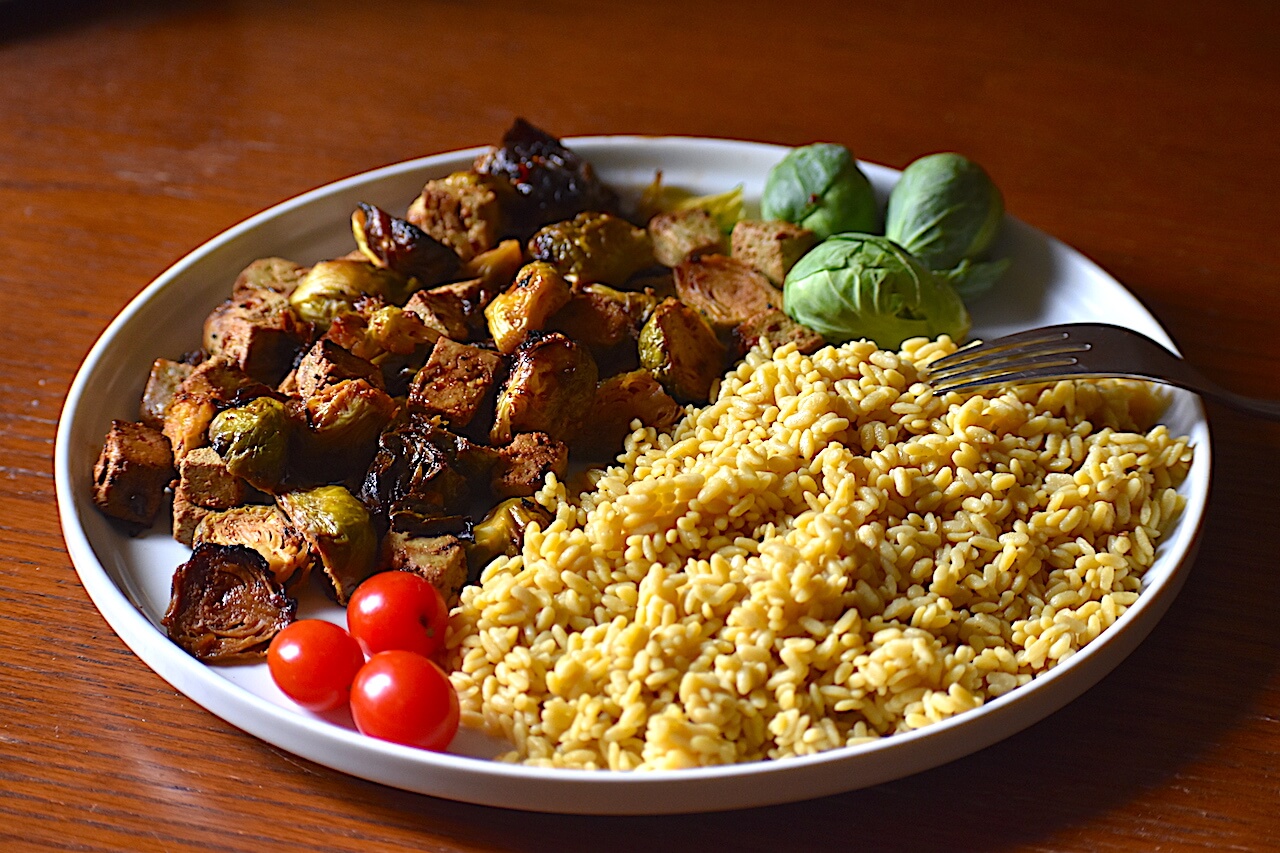
I was craving an Asian flavor dinner using Brussels Sprouts. Roasting the Brussels Sprouts would not give me the protein I want in a meal, so I decided to add Pumfu and a new rice like protein I recently found in my local health food store. Pumfu **is a plant-based protein, made from organic pumpkin seeds. It is an amazing alternative to meat, tofu, eggs, cheese and more! It has a mild nutty taste, a firm texture and takes on flavor easily. RightRice** is a dry (shelf-stable) grain packed with the power of nutritious vegetables (lentils, chickpeas, and green peas) + rice to deliver a healthier alternative to regular rice that’s loaded with complete, plant-based protein and fiber.
2TBSPSoy SauceI used Tamari because it is Gluten Free
1TBSPSweet Chili Sauce
1packagePumfucut into small cubes
1packageRight Rice
1lbBrussels Sproutscut in half
Instructions
Heat the oven to 400 degrees F
Remove loose outer leaves, cut the Brussels Spouts in half and add to bowl
Cut the Pumfu into small cubes and add to bowl
Add the toasted sesame seed oil, tamari and sweet chili sauce to the sprouts and Pumfu and mix thoroughly. Adjust to your personal tastes and add more of or less of the sauce.
Add the mix into a roasting pan and spread out so it is not in layers.
Roast for approximately 30 minutes, stirring half way through until the sprouts are crisp and the Pumfu is nicely browned.
If you have an air fryer you can cook them in the fryer for approximately 20 minutes stirring often until crisp and brown.
While the sprouts are cooking prepare the Right Rice by following the package directions. It is easy and the "rice" is added to a pot with boiling water and then removed from the heat. It sits covered for 10-12 minutes.
Enjoy!
Notes
** Right Rice: https://www.amazon.com/Rightrice-Herb-Garlic-Vegetable-Ounce/dp/B07NL7BTV5/ref=sr_1_6?crid=3KQJQA12WKKPS&keywords=Right+Rice&qid=1678056860&s=grocery&sprefix=right+rice%2Cgrocery%2C91&sr=1-6** Pumfu: https://foodiesvegan.com/pumfu-og1The nutritional information is automatically calculated and can vary based on ingredients and products used.
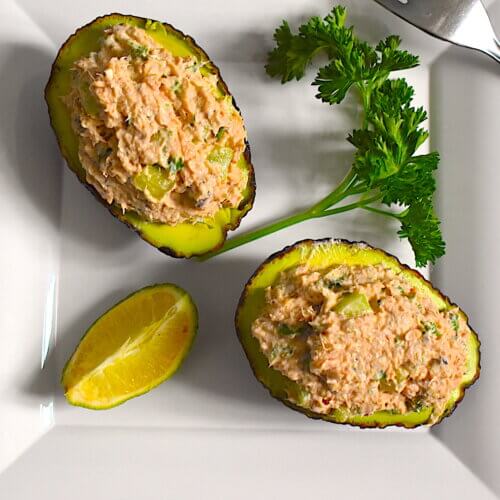
Here is an easy, no-cook recipe that is great for lunch or dinner. Using canned salmon with bones and skin is a great source of protein, calcium, phosphorus, omega-3 fatty acids, vitamin D and other essential minerals; the bones are part of that package. The bones will not only provide substantial nutrition, but they also add texture and flavor to the dish.Avocados contain an impressive amount of nutrients and are especially rich in fiber, B6, vitamin C, potassium, vitamin E, folate, and copper.Adapted from eatingwell.com
Add the yogurt, mayonnaise, celery, parsley, lemon/lime juice, mustard, salt and pepper.
Mix well.
Halve the avocado lengthwise and remove the pit.
Fill each avocado half with 1/4 cup of the salmon mixture.
Notes
The nutritional information is automatically calculated and can vary based on ingredients and products used.Leftover salmon can be stored in the refrigerator for 3-4 days and can be eaten on crackers as a snack.Wild Salmon and Natural Sea are brands that are sustainably caught and are cooked with the bones and ski.
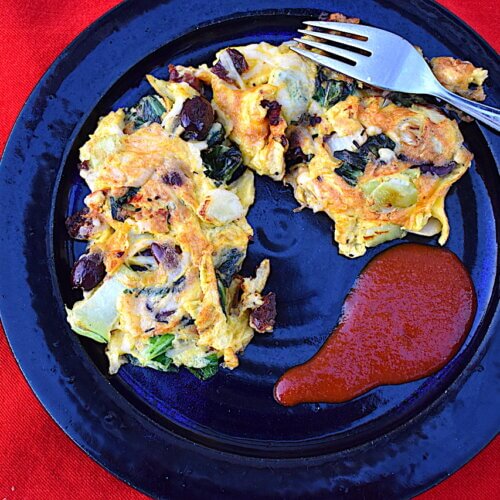
Eggs with Bok Choy, Cheddar Cheese, Sun-dried Tomatoes and Kalamata Olives
I was in the mood for eggs and also wanted great flavor with high sources of protein and calcium. I love the combination of sun-dried tomatoes and Kalamata Olives and with the addition of shredded cheddar cheese it makes it super creamy. You can use dairy cheese or a plant based cheese. I found that the plant based brand Daiya has 159 grams of calcium in a 1/4 cup serving. The Bok Choy adds a wonderful crunch (make sure not over cook). Bok choy also has nutrients that help promote bone health — including iron, calcium, phosphorus, magnesium and bone-building vitamin K.
Cut Bok Choy into small pieces, using the crunchy white stems as well as the greens
Sauté Bok Choy in olive oil for 2-3 minutes
Add the diced sun-dried tomatoes, diced Kalamata olives and cook another 2 minutes.
Beat the eggs with salt and pepper and add to the pan.
Add the shredded cheese to the eggs.
Cook eggs until done to your liking.
Notes
The nutritional information is automatically calculated and can vary based on ingredients and products used.In this recipe the calcium content is based on dairy based cheddar cheese and contains 316 mg of calcium . If using the Daiya plant based cheese the calcium content is 276 mg.
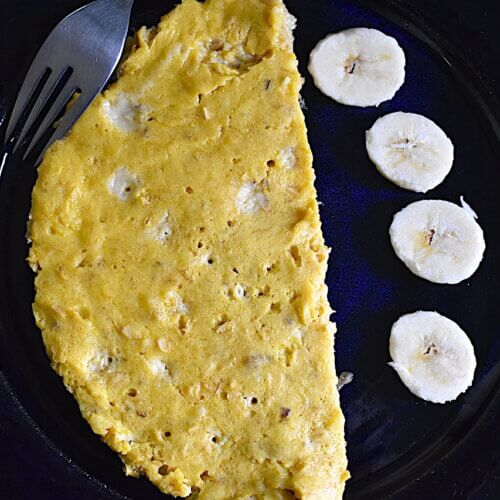
Who doesn't love banana pancakes and who doesn't want to take care of their bones? So, I decided to make my pancakes with extra Calcium and extra Protein, but with oats instead of flour. I added my own powdered calcium citrate and protein powder and just a small amount of oats. I even found a rolled oats product that has double the protein (*ZEGO Organic Oats). An added benefit is the potassium content and fiber. These were so sweet and yummy that they didn't need any maple syrup!
Place the other banana into a bowl and mash with a fork
Add one egg to the mashed banana and mix until fully blended
Add rolled oats, calcium citrate, protein powder and mix
Add olive oil or butter to your pan
Cover the bottom of the pan with the banana slices
Pre heat broiler
Pour the banana mixture over the banana slices to cover
Cook covered at medium heat for approximately 10 minutes, but be careful not to burn the bottom.
If you have trouble flipping the pancake, place the pan into the oven under the broiler until the pancake is fully cooked and nicely browned, approximately 5 minutes.
Notes
The nutritional information is automatically calculated and can vary based on ingredients and products used.* ZEGO Organic Oats - https://www.vitacost.com/zego-organic-oats
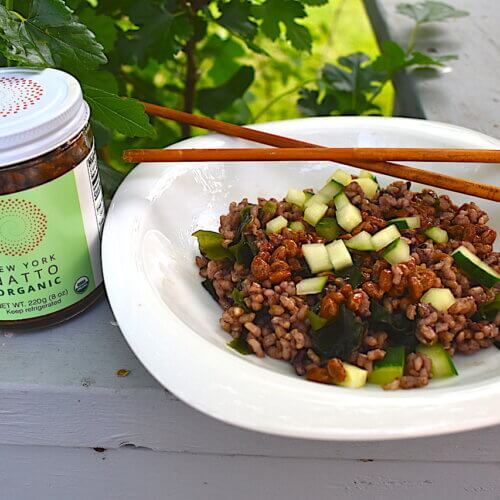
Natto Salad “Natto is a traditional Japanese comfort food made of cooked whole soybeans fermented with Bacillus subtilis bacteria. For over a thousand years, natto has been a staple food in Japan, long revered for its nutritive value and many health benefits. Today, natto remains a popular breakfast, snack or side dish, typically eaten with a bowl of rice. Ubiquitous in Japan, natto is virtually unknown elsewhere. Natto is a food that promotes gastrointestinal health, and is also rich in nutrients shown to support cardiovascular (nattokinase) and bone health. THE BEST SOURCE OF VITAMIN K2 (MK-7) - gets calcium out of your arteries and into your bones. Natto is loved for its unique flavor and aroma -- savory, umami-rich and pungent (quite similar to a deliciously stinky cheese). As a living food, natto is full of active probiotic bacteria, and as with other naturally fermented foods (e.g. wine, cheese, sauerkraut), the taste of natto evolves and intensifies with time. Freshly made natto has a milder flavor than natto that has been aged for a few weeks”.Information from New York Natto
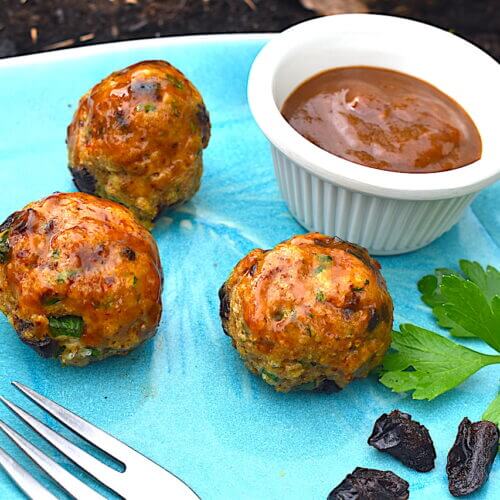
Turkey Meatballs are leaner than beef, packed with flavor, and moist with the addition of bone healthy prunes and a prune glaze. Also, the combination of fresh and dried herbs provides a unique balance of flavors. The antioxidants and anti-inflammatory properties of prunes may help prevent bone loss and aid in maintaining healthy bone density and formation, according to clinical studies. “Animal and cell studies suggest that dried plums and/or their extracts enhance bone formation and inhibit bone resorption through their actions on cell signaling pathways that influence osteoblast and osteoclast differentiation.” https://pubmed.ncbi.nlm.nih.gov/28422064/A special thanks to California Prunes for sharing their recipe that we adapted especially for your bones. https://californiaprunes.org/
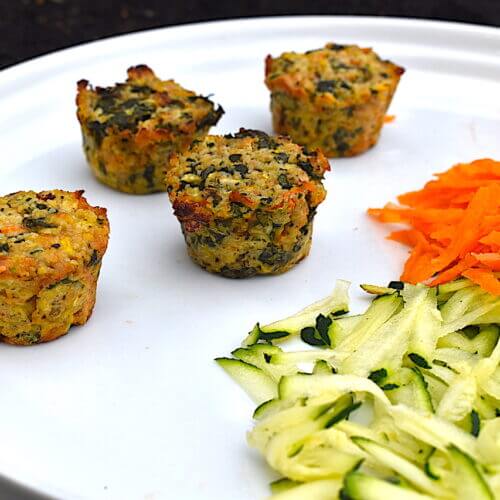
These zucchini tots are the perfect way to incorporate more veggies into your diet. They are baked rather than fried, and are a great low carb alternative for a snack, lunch or breakfast. Quick and easy to make with just a handful of ingredients, they can be made ahead of time and will last in the refrigerator for 5 days or can be frozen and reheated as needed. These healthier tots are a hit with kids and adults alike! These tots were created by the Rolling Harvest Food Rescue Nutrition Team.
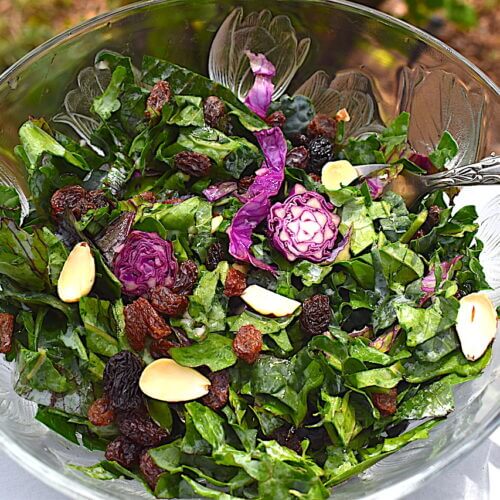
This vibrant, colorful, beautiful kale and red cabbage salad is my go to salad. Kale is a nutrition superstar due to the amounts of vitamins A, K, B6 and C, calcium, potassium, copper and manganese it contains. One cup of raw kale has just 33 calories and only 7 grams of carbohydrate. So, it’s a very diabetes-friendly/weight-friendly vegetable. Kale is a member of the cruciferous vegetable family along with cauliflower, Brussels sprouts, cabbage, broccoli, collard greens, kohlrabi, rutabaga, turnips and bok choy. Red cabbage is a good source of vitamin K and provides small amounts of calcium, magnesium, and zinc, which can help build and maintain healthy bones. Red cabbage is high in fiber, making it easier to digest foods and keep your digestive system healthy.
Course Dinner, Lunch, Main Course, Salad, Side Dish
Cuisine American
Servings 6
Calories 412kcal
Equipment
1 cutting board
1 knife
Ingredients
Raw Kale Salad
4cupskalecurly chopped
3cupsred cabbagethinly sliced
3/4cupsalmondschopped
1/2cup cheese (optional) small cubes
3/4cupcurrantsdried
Lemon Dressing
2lemonsapproximately 1/4 cup juiced
1/2tbspsaltrock salt-Himalayan Sea Salt
10tbspolive oil
2clovesgarlicfinely diced
Instructions
Raw Kale Slad
wash vegetables and dry - Important to dry as the dressing won't adhere to the kale if it is wet
remove the center stem from kale and chop into small pieces
cut the cabbage into quarters and then thinly slice
add kale and cabbage to a large bowl
add currants, almonds, cubed cheese to the salad
Lemon Dressing
macerate salt and garlic in a mortar and pestle
add macerated salt and garlic to a glass jar
add the lemon juice and olive oil to the jar with a lid
shake vigorously
add the dressing to the salad
refrigerate any leftover dressing and use on other salads, steamed veggies or as a dip for artichokes
Notes
You can add even more protein to this salad by using 2 cups of cubed chicken breast. Vegetarians you can add 2 cups of garbanzo beans for extra protein.These nutrition facts are for 1 serving of your recipe. Total servings for this recipe: 2The nutritional information is automatically calculated and can vary based on ingredients and products used.
Take the first step – boost your bone healthy with Protein!
Sign up for our newsletter and gain access to expert bone health tips and updates. As a thank you, receive your free copy of ‘Protein Guide To Healthy Bones PDF’ to help you on your wellness journey.
Struggling with bone health or osteoporosis prevention?
Let’s talk about your biggest bone health challenge. I’ll personally guide you or recommend the right solution to help you build stronger, healthier bones.
Food for Healthy Bone teaches you how to eat for healthy bones through recipes, and product reviews. As an Osteoporosis Patient Navigator, I help you in all stages of osteoporosis; from diagnosis to finding the right doctor.