Your Heart Deserves More Than a "Normal" Test Result

Written by
Irma Jennings, INHC
Uploaded
August 25
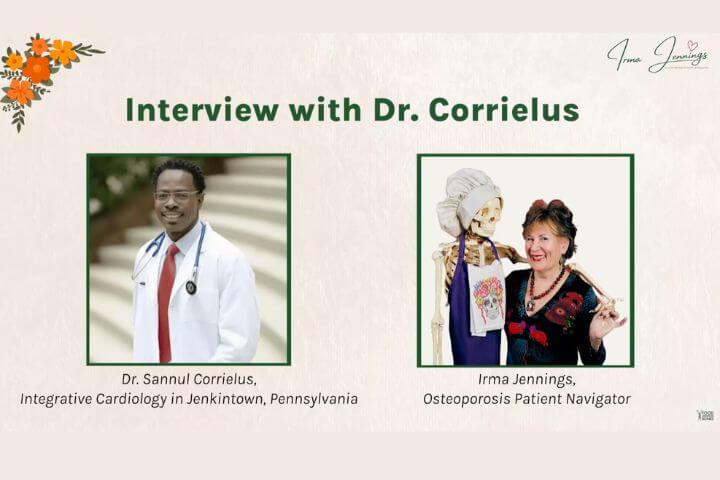

Watch the full conversation with Dr. Sanul Corrielus in the video above.
Have you ever left a doctor's appointment feeling unheard? Maybe your tests came back "normal," but something still didn't feel right. In this eye-opening conversation, integrative cardiologist Dr. Sanul Corrielus explains why that experience is so common — especially for women — and what you can do about it.
Dr. Corrielus practices what he calls a biopsychosocial approach to cardiology: treating the whole person, not just the disease. He shared the story of a 42-year-old patient whose chest pain was dismissed after a normal EKG and stress test. The real culprit? Stress-induced arterial constriction — a genuine heart issue that standard protocols completely missed.
The lesson: if your symptoms are being brushed aside, you have every right to ask for a deeper look at stress, hormones, and inflammation.
If you take away one action step from this interview, it's this — ask your doctor for a Coronary Artery Calcium (CAC) score. This simple, non-contrast X-ray measures hard plaque in your arteries. A score above zero means atherosclerosis is present, and knowing that early gives you the power to intervene.
And if your doctor refuses? You can self-pay at an imaging center for around $150. Dr. Corrielus also discussed two other valuable tools: the Coronary CTA, which reveals soft plaque a CAC scan can't see, and a comprehensive blood panel that looks at inflammation markers and genetic risk factors like Lipoprotein(a).
For prevention, Dr. Corrielus keeps coming back to fundamentals. A Mediterranean diet is his primary intervention, with calcium coming from food first and supplements only filling the gaps (aim for 1000–1200 mg total daily). Vitamin K2 can help direct calcium toward bones and away from arteries — though it deserves a conversation with your doctor, especially if you take blood thinners.
And here's the free prescription that surprised many of us: daily gratitude practice. Stress drives inflammation, and inflammation drives heart disease. A few minutes of gratitude journaling each day is a genuinely powerful way to lower that burden.
Your heart health is too important to leave to a checklist. Watch the full interview to hear Dr. Corrielus explain each of these topics in his own words — including his guidance on hormone replacement therapy and osteoporosis medications.