Email IconAccount Login Icon

Navigating Osteoporosis: Expert Insights on Dental Health, Bone Markers, and Treatment Strategies

Written by
Irma Jennings, INHC
Uploaded
May 12
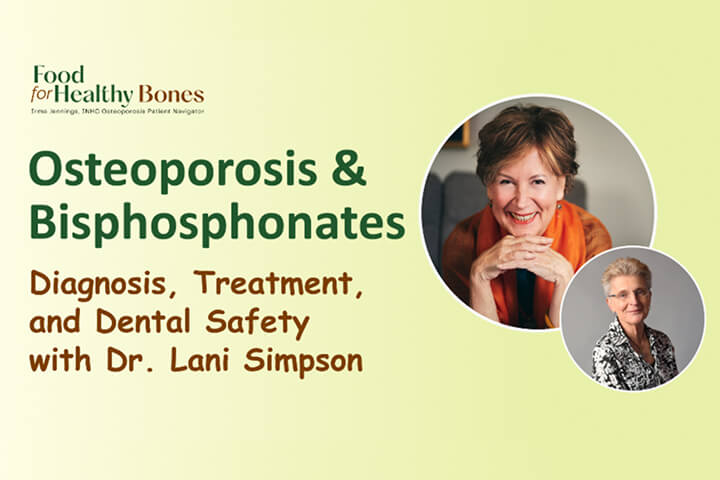
Watch the full interview here: Osteoporosis & Bisphosphonates With Dr. Lani Simpson

When you receive a diagnosis of osteoporosis or osteopenia, it’s easy to feel overwhelmed or like you’ve "failed" at your health. However, as Dr. Lani Simpson emphasizes, a diagnosis is simply a piece of data—a starting point for a lifelong conversation with your healthcare providers.

In this comprehensive guide, we dive into possible "root causes" approach to bone health, the truth about bisphosphonates and dental work, and why your bone density scan (DEXA) might not be telling the whole story.

The Critical Difference Between Bone Density and Bone Quality

Most people focus solely on their T-score from a DEXA scan. However, Dr. Simpson points out that density is only half the battle [08:57].

  • Bone Density: How much mineral is in the bone.
  • Bone Quality/Structure: The internal architecture of the bone (the "scaffolding").

You can have dense bones that are brittle and prone to shattering, much like a piece of fine china [10:41]. To get the full picture, Dr. Simpson recommends the TBS (Trabecular Bone Score), which measures the internal structure of the bone [10:24].

Osteoporosis and Dental Health: What You Need to Know

A common concern for patients on bone medications like bisphosphonates (Fosamax, Reclast) or Prolia is the risk of dental complications.

The Truth About Osteonecrosis of the Jaw (ONJ)

While the fear of ONJ is high, Dr. Simpson notes that it is extremely rare [17:46].

  • Routine Dental Work: Procedures like fillings, cleanings, and root canals are generally safe [30:52].
  • Surgical Procedures: Extractions or implants that involve the bone carry a slightly higher risk. Dr. Simpson suggests completing major dental work before starting bone medications [46:55].
  • Pro-Tip: For periodontal health, Dr. Simpson suggests swishing with baking soda dissolved in water to neutralize the acidic environment that contributes to gum disease [15:23].

Beyond the DEXA: The Power of Bone Turnover Markers

One of the most important takeaways is that you shouldn't treat a bone density test; you should treat the person [06:14]. Dr. Simpson advocates for Bone Turnover Markers (BTMs) to see if you are actively losing bone right now [22:52].

  • CTX (C-telopeptide): Measures bone resorption (loss). Ideally, this should be around 275 pg/mL or lower [24:21].
  • P1NP (Procollagen type 1 N-terminal propeptide): Measures bone formation. For those not on medication, a stable number is around 30 ng/mL [24:21].

Important: Always get these tests done first thing in the morning, while fasting, and stop taking supplements containing Biotin for 3–5 days prior, as it can interfere with lab results [51:12].

Medication Strategies: Anabolics vs. Bisphosphonates

Dr. Simpson explains the two main categories of bone drugs:

  • Anabolics (Forteo, Tymlos, Evenity): These are "bone builders" that stimulate the body to create new bone. They can reduce fracture risk by up to 80% [21:03].
  • Antiresorptives (Bisphosphonates like Fosamax): These slow down the cells that "eat" bone. While helpful for short-term use (2–3 years), long-term use can lead to brittle bone [19:45].

The Strategy: Many experts now believe in using a "bone builder" first to gain bone, followed by a bisphosphonate to "lock in" those gains [21:15].

Nutrition and Lifestyle Myths

  • The Calcium Myth: You do not need to get all your calcium from food. If you can't tolerate dairy, low-dose supplements (200-300mg at a time) are perfectly fine [56:27].
  • Vitamin D: Dr. Simpson’s "sweet spot" for blood levels of Vitamin D is 45 ng/mL [13:05].
  • Collagen: Rather than taking collagen supplements, Dr. Simpson focuses on the building blocks: Vitamin C, protein, and Silicon (horsetail) to help the body produce its own collagen [39:04].

Final Thoughts

Osteoporosis is a complex, multifactorial condition. Whether you are a vegan who needs protein awareness, [53:13], dealing with a history of steroid use [32:11], or just starting your journey, the key is to find a practitioner who looks at the root cause—including gut health, hormones, and kidney function—rather than just a T-score.

Strong bones. Stronger you.
Let’s create a plan that supports your bone health and overall vitality.

Book your complimentary discovery call today — your future bones will thank you.
Book a discovery call now

From my bones to yours,

Irma Headshot Image
Irma Jennings, INHC - Osteoporosis Patient Navigator

Take the first step – boost your bone healthy with Protein!

Sign up for our newsletter and gain access to expert bone health tips and updates. As a thank you, receive your free copy of ‘Protein Guide To Healthy Bones PDF’ to help you on your wellness journey.

Related Articles:

Navigating Osteoporosis: Expert Insights on Dental Health, Bone Markers, and Treatment Strategies

blog

If Your Osteoporosis Diagnosis Came with Shame, You’re Not Alone

blog
Irma Feeding Skelly some Vegetables

8 Daily Tips for Bone Health and Strength

blog, bone-health
1 2 3 40

Struggling with bone health or osteoporosis prevention?

Let’s talk about your biggest bone health challenge. I’ll personally guide you or recommend the right solution to help you build stronger, healthier bones.
Schedule a discovery call

© 2025 Irma Jennings. All rights reserved worldwide. | Website/Hosting by Meadowlark IT.

Website/ Hosting by Meadowlark IT
chevron-down