My Heart Was the Case Study: Why a CAC Score of Zero Didn't Tell the Whole Story

Written by
Irma Jennings, INHC
Uploaded
October 23


Heart disease is the number one killer of women in the United States, responsible for about one in five female deaths. Yet many women still believe breast cancer is the bigger threat. I was one of them for longer than I'd like to admit.
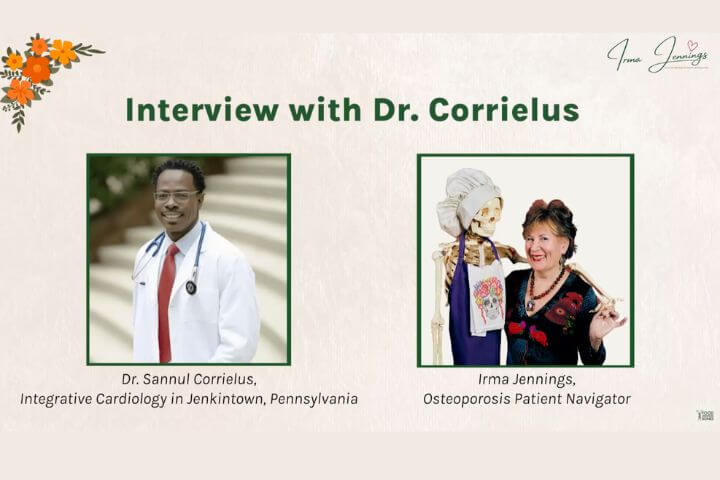
So when my integrative cardiologist, Dr. Sanul Corrielus, and I sat down to talk about women's heart health, I offered him the most honest example I had: my own heart.
My father died at 54. My mother at 66. My sister at 60. Add 25 years of smoking and a high-stress Wall Street career, and you can see why I don't leave my heart to chance.
But here's the first surprise. When I told a lipidologist I had a family history of heart disease, she asked how I knew. Without medical records or autopsy reports, family history is a story, not data. That question sent me looking for real numbers.
Two in three women who die suddenly of heart disease had no prior symptoms. And when women do have symptoms, they rarely look like the movie version. Watch for:
These are easy to dismiss, by us and by our doctors. That's exactly why testing matters.
My advanced blood work looked alarming:
On paper, I was a statin prescription waiting to happen.
But my imaging told a different story. My coronary artery calcium (CAC) score was zero. Twice. My carotid ultrasound, echocardiogram, stress test, and heart monitor were all normal.
So which was right?
A CAC scan only sees calcified plaque. It can't see soft plaque, the kind that's more likely to rupture and cause a heart attack.
To settle the question, Dr. Corrielus ordered a coronary CT angiography (CCTA), a scan with contrast dye that can detect soft plaque. Mine was read with HeartFlow AI, which the technician said was faster and more accurate than the older off-site readings.
The result: no soft plaque. My blood work showed potential risk, not actual disease.
With that complete picture, Dr. Corrielus decided I didn't need a statin. We'll recheck in a year.
This is what integrative cardiology means to me. Not one number. Not one test. The whole picture, so you're neither under-treated nor over-treated.
Root-cause thinking showed up in another way too. I'd had an allergic reaction to red yeast rice, a natural cholesterol option that works much like a mild statin. Dr. Corrielus traced the reaction not to the red yeast rice itself but to a binder in that particular brand. Different brand, different story. We'll revisit it when the timing is right.
Dr. Corrielus walks through every one of my results in our video interview, including the questions women most often ask him.
Your heart deserves more than one number. So do you.
This post shares my personal experience and is for education only, not medical advice. Please talk with your own doctor about the testing and treatment that's right for you.